Ballistics: The science of the motion of projectiles, such as bullets or pellets.
Whether you’re hunting or practicing with a firearm, there are several things you can see and control, like where your muzzle’s pointing, if the safety is on, and if the gun is loaded.
But there are some very important things happening that you just can’t see, like the speed and angle at which the bullet travels and the distance that it will go. And these factors make up the science of ballistics.
So it’s our responsibility as hunters to know the ballistics of our firearm and ammunition before we pull the trigger.
Know Your Firearm’s Range
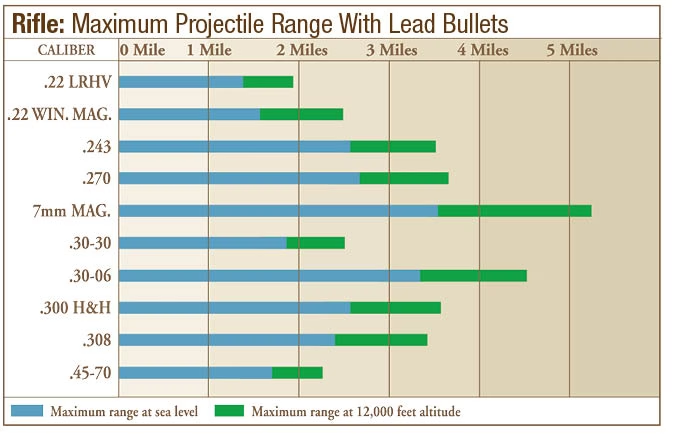
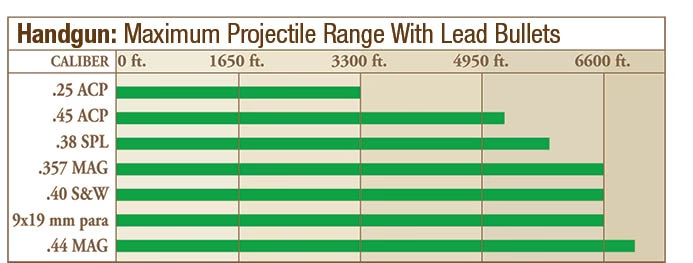
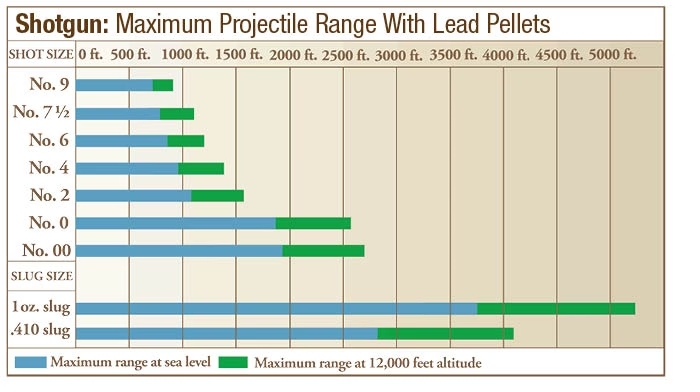
Knowing your firearm’s “maximum projectile range” is critical to being a safe and responsible hunter. The maximum projectile range tells you at what distances your firearm’s projectile could cause injury or damage to persons, animals, or objects. When hunting, knowing the “effective hunting range” lets you immediately assess when a shot will give a clean kill. The effective hunting range will always be less than the maximum projectile range. Learning to estimate distances and knowing your firearm’s projectile range and your effective hunting range are important parts of hunting.
The following charts show the maximum projectile range when you use lead bullets in your rifle and Handgun and well as lead pellets in your shotgun.
Whether you’re hunting or practicing, think about firearm safety before you pull that trigger. Know what your gun is capable of and your abilities as a shooter.
Need a Hunter Safety Certificate? Start an online hunter safety education course for your state at Hunter-ed.com.
Hunter-ed.com works with state agencies to produce a hunter safety education course that’s accurate, interesting, and easy to understand.
Share This Article
HUNTING
RELATED ARTICLES
National Safety Month: Secure Firearm Storage Reminders for Hunters
For many hunters, the off-season is spent scouting, practicing at the range, maintaining equipment and preparing for the next adventure. It’s also a good time to review how hunting firearms are stored when they’re not in use.
June is National Safety Month, and this year’s observance follows Gun Storage Check Week®, a nationwide reminder for firearm owners to evaluate their storage practices and ensure firearms are secured from unauthorized access.
Whether you hunt deer, waterfowl, upland birds, turkey or big game, responsible firearm ownership extends beyond the field. Secure firearm storage helps protect families, prevent theft and ensure hunting firearms are ready for their next outing.
Why Secure Firearm Storage Matters
Hunters often accumulate a variety of firearms and equipment over the years. Rifles, shotguns and muzzleloaders may be stored for months between seasons, making proper storage especially important.
Secure firearm storage helps:
Prevent unauthorized access by children and other individuals.
Reduce the risk of firearm theft.
Protect valuable hunting firearms and equipment.
Promote responsible firearm ownership year-round.
Support safe hunting traditions for future generations.
While hunters focus heavily on safety in the field, safe firearm handling and storage at home are equally important.
What Is Secure Firearm Storage?
Secure firearm storage means taking steps to help prevent unauthorized access to firearms when they are not in use.
Best practices include:
Store firearms unloaded.
Keep firearms in a locked safe, cabinet, vault or storage case.
Use firearm locking devices as an additional layer of security.
Store ammunition in a separate locked location.
Regularly inspect firearms and storage equipment to ensure everything remains secure and in good working order.
Many hunters choose to store firearms in a gun safe while also using cable locks or other locking devices for added security.
Protecting Firearms at Home and on the Road
Hunters frequently travel with firearms for range trips, hunting camps and out-of-state hunts. While traveling, it is important to plan ahead for secure storage.
If a firearm must be left unattended in a vehicle, secure it in a locked storage device and keep it out of sight whenever possible. Never leave an unsecured firearm in a vehicle.
Taking a few extra precautions can help prevent theft and protect your hunting equipment.
Review Your Storage Practices Before Hunting Season
National Safety Month is a great opportunity to take inventory of your storage practices and make improvements where needed.
Ask yourself:
Are my firearms secured when not in use?
Can children or unauthorized individuals access them?
Are my locks and storage devices functioning properly?
Is ammunition stored separately and securely?
Have I inspected my gun safe, locks and storage areas recently?
A quick review today can help ensure your firearms remain secure throughout the year.
Additional Resources for Hunters
Project ChildSafe® offers free educational materials and resources to help firearm owners make informed decisions about safe firearm handling and storage.
Helpful resources include:
This National Safety Month, take a few moments to review your firearm storage practices. Responsible hunting begins long before opening day and secure firearm storage is an important part of protecting our families, our communities and our hunting traditions.
Gun Storage Check Week Reminds Hunters to Make Sure It’s Secure
For hunters, firearm safety is part of every hunt. We practice safe firearm handling in the field, know our target and what’s beyond it and take steps to ensure a safe and successful experience outdoors.
That commitment to safety continues long after the hunt is over.
That’s the message behind Gun Storage Check Week®, taking place June 1–7. During this national firearm safety awareness week, gun owners are encouraged to take a few moments to review how they store their firearms and ensure they are secured from unwanted access.
The campaign’s message is simple: Make Sure It’s Secure®.
Gun Storage Check Week serves as an annual reminder that securely storing firearms when they are not in use can help prevent accidents, theft and suicide. It also encourages firearm owners to explore the many storage options available today to find a solution that best fits their lifestyle and needs.
Take a Moment to Check Your Storage Practices
For many hunters, firearms may spend months stored between seasons or travel between home, hunting camps, lodges and hunting destinations throughout the year.
Gun Storage Check Week is an opportunity to ask a simple question: Are your firearms securely stored when not in use?
There are a variety of storage options available, including:
Cable locks
Lock boxes
Lockable firearm cases
Full-size safes and cabinets
The right solution may vary depending on your household, the number of firearms you own and how frequently they are used. Learn more about safe firearm storage options.
Secure Storage Helps Protect Hunting Traditions
Hunters often introduce family members and friends to the outdoors and help pass hunting traditions on to the next generation.
Secure firearm storage is an important part of responsible firearm ownership and helps ensure firearms remain inaccessible to unauthorized users, including children and others who should not have access.
Get Involved During Gun Storage Check Week
Hunters can support the campaign by:
Reviewing their current firearm storage practices
Learning about available storage solutions
Sharing firearm safety messages with family and hunting partners
Talking with new hunters about responsible firearm ownership
Visitors to GunStorageCheck.org during June 1–7 can also enter the Gun Storage Check Week Sweepstakes for a chance to win a B.O.S. Lock Fusion and earn bonus entries by watching firearm safety videos. One winner will be chosen on June 8. Terms and Conditions apply.
Whether you’re preparing for the upcoming season, maintaining firearms during the offseason or introducing someone new to hunting, Gun Storage Check Week is a reminder that responsible firearm ownership includes making sure firearms are secure when they’re not in use.
Learn more at GunStorageCheck.org.
[caption id="attachment_95385" align="aligncenter" width="601"]Enter for a chance to win a B.O.S. Lock Fusion.[/caption]
3 Easy Pheasant Dinners Ready in 30 Minutes or Less
By: Jeff Benda
As a wild game chef and full-time recipe developer living in North Dakota, pheasant shows up in our kitchen a lot. I cook for my wife and 10-year-old daughter, and my two biggest critics are looking for dishes that are mouthwatering and save-worthy. They are the kind that are "You should make this for us again next week" good. The following pheasant recipes are ones I keep coming back to because they are flavorful, foolproof and realistic for everyday life.
These are fun upgrades from that old pheasant and cream-of-mushroom soup in a slow cooker recipe your grandma made. They'll make cooking pheasant for dinner anything but boring. And all of them can be on the table in 30 minutes or less, making them the perfect option for a quick weeknight wild game dinner to feed your family or friends.
Quick and Crispy Fried Pheasant Fritters
On busy weeknights, dinner needs to land somewhere between wholesome and fast without a stop at the drive-thru. This recipe turns a couple of pheasant breasts into a golden, pan-fried treat that cooks in minutes, so you can squeeze in a sit-down family dinner on a tight schedule.
The diced pheasant is mixed with mozzarella, eggs and a touch of flour and cornstarch, creating fritters that fry up crisp on the outside with a soft, flavorful center. The batter comes together in one bowl without complicated steps or culinary gymnastics. It can even be made up to a day ahead to make life even easier. Serve them with the quick aioli or tuck them into hamburger buns for a grab-and-go option.
1 celery stalk, shredded using the grater attachment of a food processor or mandoline
1 tablespoon minced garlic
1 tablespoon freshly squeezed lemon juice
¼ teaspoon kosher salt
⅛ teaspoon black pepper
⅛ teaspoon onion powder
⅛ teaspoon celery seed
Instructions
Make the Fritters
In a large mixing bowl, add the pheasant, mozzarella, eggs, mayonnaise, flour, cornstarch, dill, salt and black pepper and stir together until well combined. You can make the fritters right away, but if you have time, cover the bowl with a lid or plastic wrap and refrigerate for 2 hours or up to overnight. This will give the pheasant more time to marinade, so you end up with fritters that are juicier and more flavorful.
Line a rimmed baking sheet with paper towels. In a large nonstick frying pan over medium heat, heat the olive oil. Working in batches, drop six 1-tablespoon portions of the pheasant batter into the pan. Use a spoon or spatula to flatten into 2-inch disks. Fry for 2 to 3 minutes per side until the bottom turns golden brown and the internal temperature reaches 160 degrees F using an instant-read meat thermometer.
Transfer cooked fritters to a paper towel-lined baking sheet. Repeat with the remaining batter, adding more olive oil as needed. Serve immediately.
Make the Garlic Aioli
In a medium mixing bowl, whisk together the mayonnaise, shredded celery, minced garlic, lemon juice, salt, black pepper, onion powder and celery seed.
Serve the garlic aioli with the fritters or store it in an airtight container in the refrigerator for up to 3 days.
Easy Pheasant Pesto Pasta
This hassle-free pheasant pasta has saved many an evening between our daughter's piano lesson and gymnastics. Built around quick-cooking pheasant breast, a creamy sauce and bright basil pesto, it comes together in just 25 minutes - after a short brine - to ensure the lean meat stays juicy.
I'll admit that based on our usual dinner plates, my daughter and I could easily be mistaken for committed carnivores. Left to our own devices, most meals would involve some form of grilled or pan-seared meat with a side of mashed potatoes. That's exactly why this pheasant recipe includes both asparagus and basil pesto. My wife frequently reminds me that green vegetables deserve equal billing at the table, not just honorary garnish status.
Ingredients Needed
6 ounces fettuccine or spaghetti noodles
2 boneless, skinless pheasant breasts from 1 bird
¾ teaspoon kosher salt, divided
¼ teaspoon black pepper, divided
⅛ teaspoon garlic powder
⅛ teaspoon onion powder
2 tablespoons olive oil, divided
6 ounces asparagus, ends trimmed and cut into 2-inch pieces
1-½ cups heavy whipping cream
2 tablespoons basil pesto
Instructions
Dissolve 2 tablespoons of salt in 1 quart of cool water in a container large enough to hold the brine and the pheasant breasts. Submerge the pheasant completely in the brine. Cover and refrigerate for 30 minutes or up to 4 hours. Remove the pheasant and pat dry with paper towels before cooking.
Cook pasta
In a large pot of salted boiling water, cook according to the package instructions for about 12 minutes. While pasta is cooking, proceed with the recipe, then add the drained cooked pasta to the sauce in the last step.
Cook pheasant
While the pasta is cooking, season pheasant breasts on both sides with ½ teaspoon salt, ⅛ teaspoon black pepper, garlic powder and onion powder. Heat a large skillet over medium-high heat with 1 tablespoon olive oil. When oil is hot, add pheasant and sauté until fully cooked through (2 minutes per side). Remove from the pan and rest 5 minutes, then slice into bite-sized pieces.
Sauté asparagus
While the pheasant is resting, add the remaining 1 tablespoon of olive oil to the same skillet with the asparagus pieces. Sauté, stirring occasionally, for 2- to 3-minutes or until tender.
Make the sauce
Add heavy whipping cream, bring to a simmer over medium heat and cook 3 minutes, stirring occasionally. Stir in basil pesto, then add cooked pheasant and cook 2 minutes. Season sauce with remaining ¼ teaspoon salt and ⅛ teaspoon black pepper.
Golden Pheasant Curry
This mild, family-friendly curry features pheasant simmered in a creamy tomato-and-coconut-milk sauce infused with aromatic spices, all coming together in less than 30 minutes. The spice mix includes curry powder and turmeric to create the signature "golden" color. Since all of my wild game recipes are tested and approved by my Minnesota-born wife and 10-year-old daughter, the spice level stays mild. For you, that means kids will happily ask for seconds instead of reaching for emergency peanut butter sandwiches.
Serve this pheasant curry over basmati rice. The rice quickly absorbs the rich, velvety sauce, so be generous, so you create a little pool of sauce that will be begging to be scooped up with soft pieces of buttery garlic naan.
Ingredients Needed
1-½ pounds pheasant breast (from 2 birds), cut into 1-inch pieces
3 tablespoons avocado oil or olive oil, divided
kosher salt
black pepper
1-½ tablespoons mild curry powder
1 tablespoon ground coriander
2 teaspoons ground cumin
1 teaspoon paprika
½ teaspoon turmeric
½ teaspoon sugar
1 large yellow onion, diced
2 teaspoons minced garlic
2 teaspoons minced fresh ginger
1 cup chicken broth
1-5-ounce can diced tomatoes
1-5-ounce can of coconut milk
2 tablespoons tomato paste
2 cups fresh spinach
⅛ teaspoon crushed red pepper flakes (optional)
Instructions
Place the pheasant meat in a bowl. Sprinkle with ½ teaspoon salt and ¼ teaspoon black pepper, then toss until all pieces are evenly coated.
In a separate small bowl, combine 1 teaspoon salt, ½ teaspoon black pepper, the curry powder, ground coriander, ground cumin, paprika, turmeric and sugar. Set aside.
Add oil to a large skillet over medium-high heat. Add pheasant and sauté until the meat is no longer pink on the outside, about 4 minutes. You don't have to cook it all the way through at this point. Transfer pheasant meat to a plate.
To the same skillet, add onion and sauté for about 3 minutes over medium heat.
Add garlic and ginger and cook for 1 minute, then stir in ½ of the seasoning mix and cook for 1 minute more.
Stir in chicken broth, diced tomatoes, coconut milk and tomato paste. Simmer for 10 minutes, stirring often.
Now stir in spinach, cooked pheasant and the remaining ½ of the seasoning mix and simmer for 2 more minutes.
Sprinkle with crushed red pepper if so desired and serve over cooked white rice.
Discover more of Jeff Benda's recipes for wild game at Wild Game & Fish.
About the Author
Jeff Benda is based in Fargo, North Dakota, where he is an avid outdoorsman, hunter, angler and family man. He spent 25 years in the restaurant industry and ran a catering business. He now focuses his time as an outdoor writer and running his food blog wildgameandfish.com where he provides achievable wild game and fish recipes designed to build confidence for new cooks and inspire everyone to elevate their cooking.